
Simple ideas for cat enrichment at home
Anyone who shares a home with a cat knows the look. It’s three in the morning, there is nothing wrong, and yet someone is sitting on your chest and staring at you like you owe them an explanation. Often, that’s a bored cat. Indoor cats have a safe, comfortable life, but a house can be a small place for an animal built to stalk, climb, scratch and survey the neighborhood from a high perch.
Enrichment is how we close that gap. It means giving your cat safe, interesting things to do that scratch their natural itches, and it doesn’t have to be elaborate or expensive. Here are simple ideas that work in most homes, along with how to introduce them at your cat’s own pace.
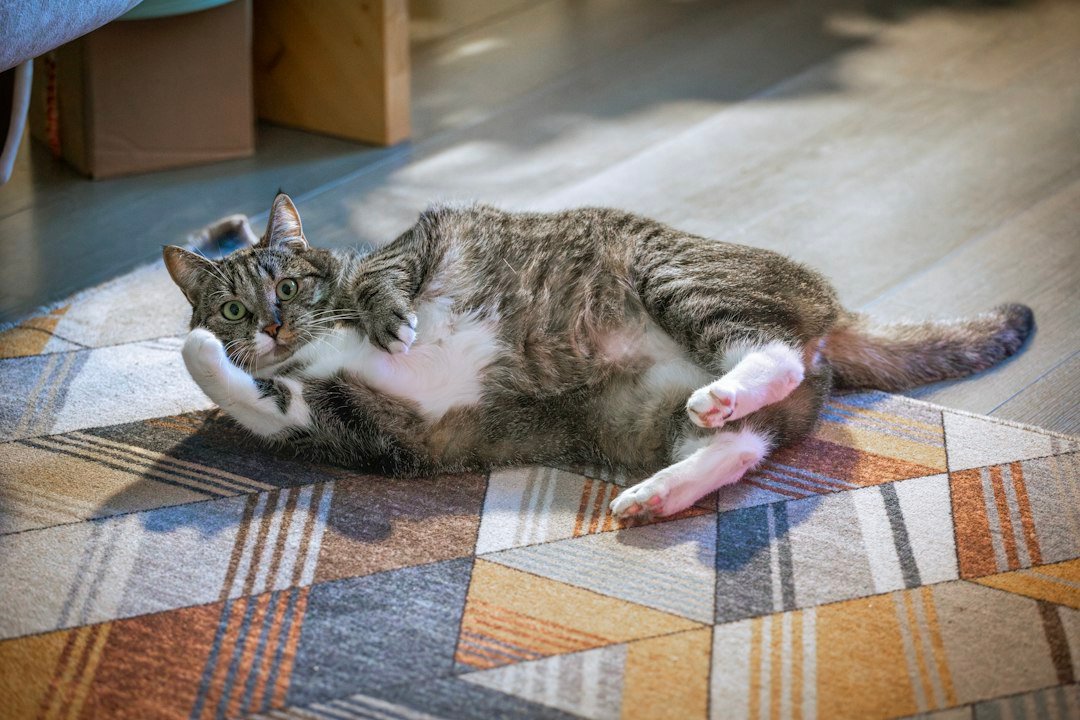
What your cat is really asking for
Cats are small predators. In the wild, they spend a lot of time hunting, stalking, pouncing, climbing and watching. A bowl of food that appears on schedule and a sunny spot on the sofa meet the basic needs, but they skip the fun part. When those instincts have nowhere to go, you may see behavior you’d rather not, like scratching furniture, ambushing ankles, over-grooming or yowling at odd hours.
That doesn’t mean every unwanted behavior is boredom. But giving your cat more to do is a kind and low-risk place to start, and many owners find their cat seems calmer and more content.
Play sessions that feel like hunting
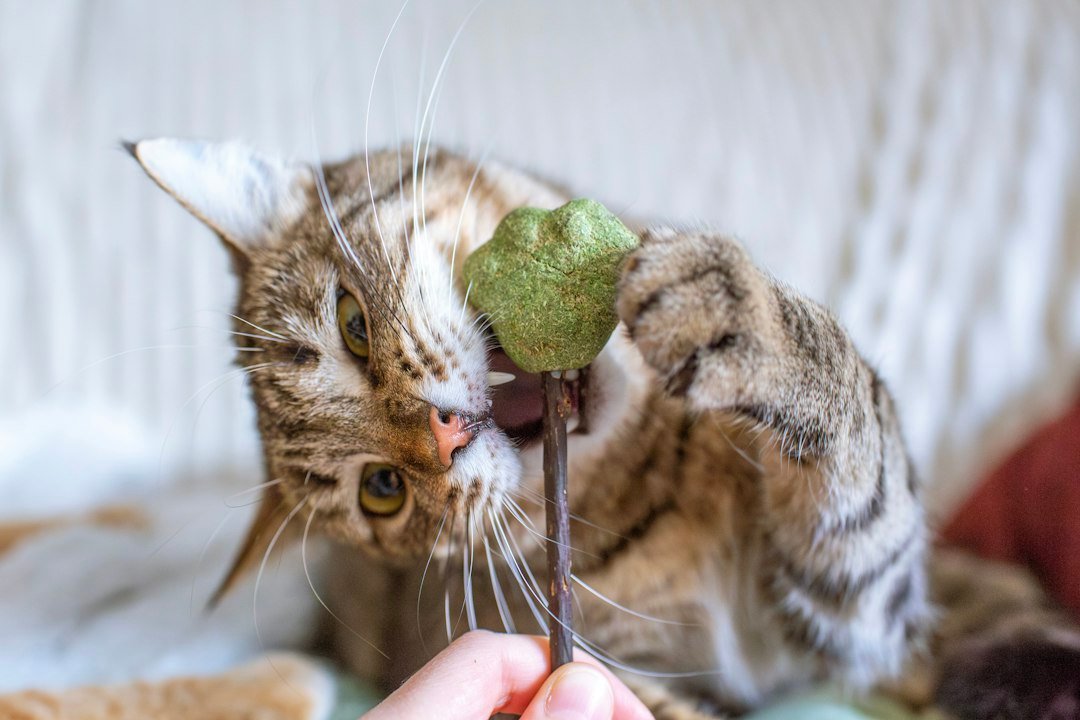
If you only do one thing, make it regular play. The best kind imitates prey: a wand toy or similar that you move like a bird or a mouse, darting away, pausing, hiding behind furniture. Let your cat stalk, chase and pounce, and let them catch it every so often, since a hunt that never ends in a catch is frustrating.
- Short and regular beats long and rare. Five to fifteen minutes once or twice a day suits many cats.
- Finish with a reward. A small treat or part of a meal lets the hunt end the way it would in nature.
- Put toys away safely. String, ribbon, elastic and wand cords are dangerous if swallowed. Store them out of reach after each session, and never leave your cat alone with them.
- Rotate the toys. A toy that’s always out gets boring. Bring one out for a few days, then swap.
Puzzle feeders, introduced gradually
Cats are natural foragers, and a puzzle feeder lets them work for their food instead of eating from a bowl. Start with an easy level, such as a feeder with large openings or just a few pieces of kibble inside. Use part of your cat’s normal daily food so the extras don’t add up, and supervise the first few sessions.
Keep their familiar bowl available while they learn. Some cats take to a puzzle feeder right away. Others need a few days to work out what it is, and a few never really warm to it. If your cat ignores it, make it simpler, or put some food in the feeder and some in the usual bowl. There’s no rush.
Give them somewhere high
Cats feel safer when they can see the room from above. Shelves, perches and sturdy cat trees give them a place to climb, rest and keep an eye on the household. If your cat spends a lot of time on top of the fridge or bookcase, they’re telling you what they want.
- Check stability. A wobbly tree is dangerous and a cat that’s been startled by one may avoid it for good. Follow the manufacturer’s assembly and weight guidance, and anchor tall pieces where recommended.
- Think about your cat. Kittens, seniors and cats with mobility problems may need lower, easier steps rather than tall climbs.
- Place it well. Put perches near windows or in busy rooms where your cat likes to watch, and keep them away from hazards.
Planning a climbing area? Browse our Armarkat cat tree collection and compare B7701, X8303, A8104 and S8502 to check the available layouts and product details. Our cat trees vs wall shelves guide explains the space and installation considerations.
The six-piece cat wall shelves set has unresolved load limits, usable dimensions and approved mounting requirements. These remain awaiting supplier confirmation; do not assume the included fixings suit your wall. The A8104’s load rating and usable resting dimensions also remain unconfirmed, as noted on its product page.
Scratching is not a problem to fix
Scratching is normal. Cats scratch to stretch, mark territory and keep their claws in shape. The goal isn’t to stop it but to point it somewhere you can both live with. Offer scratching surfaces in different forms, such as a tall post for stretching and a flat board for horizontal scratching, and put them where your cat already scratches, usually near sleeping spots and doorways. Praise or reward them when they use it. If your sofa is the favorite target, try placing a scratcher right next to it first.
Let them watch the world
A window perch with a view is one of the simplest forms of enrichment there is. Birds, squirrels, passing cars and drifting leaves can keep a cat entertained for a long time. Make sure windows are secure and screens are sturdy, because cats can fall or push through weak ones. Some owners put a bird feeder outside a window for a free show.
Cardboard boxes and other free toys
Enrichment doesn’t have to cost anything. A cardboard box with a couple of holes cut in it makes a fine hideout and a good ambush spot. A paper bag with the handles removed becomes a tunnel. A crumpled ball of paper gives hours of batting practice. Just check that there’s no tape, staples or anything your cat could swallow, and take away anything they start to chew apart. Many owners find the cheapest options are the ones their cat likes best.
Offer choice and follow their lead
Every cat is different. Some love chasing, others prefer to watch, and a few would rather explore a cardboard box than a fancy toy. The best enrichment lets your cat choose. Put a new item down and let them approach it in their own time, rather than pushing it toward them. A cat that sniffs and walks away today may investigate tomorrow. Following product instructions for size, care and supervision helps keep things safe.
Variety helps too. Try different textures, sounds and heights. Rotate toys, move a perch to a new spot, and put a cardboard box on the floor. Small changes keep life interesting without overwhelming a cautious cat.
Rest and routine matter as well
Enrichment isn’t only about activity. Cats also need quiet places to retreat, sleep and feel safe. A predictable routine, with meals and play at roughly the same times, helps many cats relax. If you have a shy or anxious cat, introduce things one at a time rather than filling the room with new items at once.
When to ask for help
If your cat suddenly changes their eating, drinking, grooming, litter box habits or behavior, don’t assume it’s boredom. These changes can signal a health problem, and your veterinarian is the right person to ask. The same goes for persistent aggression, over-grooming or hiding. Enrichment can make daily life richer, but it works best alongside regular veterinary care.
A simple place to begin
You don’t need to do everything. Pick one idea this week, such as a ten-minute play session in the evening or a window perch in a sunny spot, and see how your cat responds. Build from there, based on what they enjoy.
If you’d like inspiration, browse our cat enrichment collection, including cat trees and wall shelves for giving your cat somewhere high to climb and watch from. As always, read the product page and follow the manufacturer’s instructions for assembly, weight limits and supervision.
Keep reading: What is dog enrichment? · Cat enrichment collection
Photos by Tatyana Rubleva on Unsplash.